
Reviewed by Michael E. Rhynus, MDiv
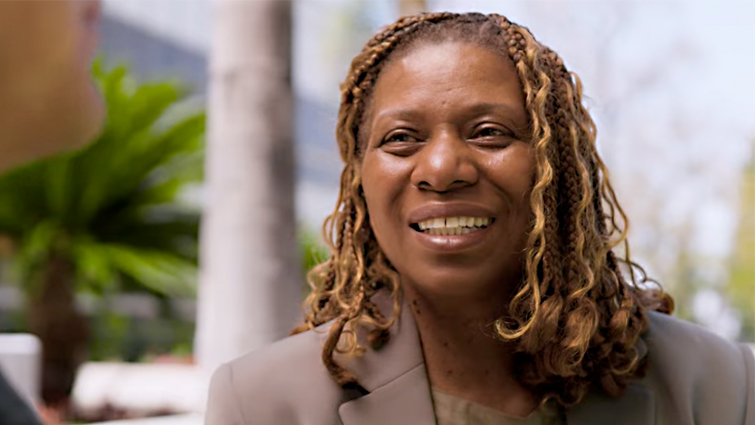
One morning in March 2023, Enda Banks was praying at her kitchen counter when she heard a voice she couldn't explain away: "I've called you to be my chaplain." This single moment of clarity led Enda straight to Loma Linda University's Master of Science in Chaplaincy program.
Her story isn't unusual here. Many students arrive at LLU after years of feeling drawn to ministry or spiritual care. If that sounds familiar, you're in the right place.
This article covers what chaplains actually do, how our program prepares you, and what it takes to apply.
What Does a Chaplain Do?
A chaplain is a professional spiritual caregiver who works outside traditional religious settings. Rather than serving one congregation like a pastor, chaplains provide spiritual support in hospitals, the military, correctional facilities, schools, and corporate environments.
Chaplains are also trained to serve everyone. A hospital chaplain might sit with a grieving atheist, support a devout Muslim family, and pray with a Christian couple over the course of their day. They help people during some of life's hardest moments and offer comfort and presence regardless of a person's faith background. This work requires both theological grounding and a deep sense of what it means to be human.
LLU's Chaplaincy Program
Our MS in Chaplaincy is a professional graduate degree that blends foundational theological education with real clinical experience. Intentionally designed with small class sizes, our program is specifically designed to put your professional growth first. It's also one of the few programs in the country built to meet all academic requirements for full board certification, through both the Association of Professional Chaplains (APC) and the Adventist Chaplaincy Institute (ACI).
At LLU, our mission is "To continue the teaching and healing ministry of Jesus Christ," and it guides everything we do. We'll give you the tools to serve others with the standard of Christian professionalism set by the APC and ACI.
Core Chaplaincy Skills and How You'll Build Them
Chaplains strive to be experts in active and empathetic listening, compassionate care, crisis intervention, and spirituality. Here are the four core competency areas you'll develop during your education.
| Core Competency | What It Means | How You'll Build This Skill |
|---|---|---|
| Theory & Clinical Practice | Apply theological knowledge to real-life spiritual care situations. | Explore issues in society and healthcare from Christian and philosophical perspectives. |
| Professional Chaplain Identity | Understand who you are as a chaplain — ethically, spiritually, and vocationally. | Develop your sense of care and service through mentorship, study, and field experience. |
| Advanced Professional Skills | Care for people through open communication, assessment, and crisis support. | Rigorous study of theology, social sciences, bereavement, communication, family wholeness, and more. |
| Leadership Within Organizations | Be equipped to guide culture and decision-making in a variety of professional settings, including healthcare, military, education, and more. | Learn how to use pastoral authority. Study group dynamics, organizational behavior, culture, social systems, and interpersonal relationships. |
What Our Students are Saying
“I knew God had answered my prayers . . . He brought me where I belong. This is definitely my purpose. This is my calling."
How Long Does it Take to Become a Chaplain?
Our program is 108 quarter units completed over approximately three years of full-time study. You may transfer a maximum of 14 quarter units from approved graduate-level courses.
Clinical Pastoral Education (CPE)
You must also complete two units of Clinical Pastoral Education (CPE) with an accredited organization before graduating. This is how you'll demonstrate your expertise in the field.
LLU is an accredited CPE center and offers an excellent setting for this clinical training. You can also fulfill the requirement at any site in North America approved by the Association for Clinical Pastoral Education (ACPE). Note, each site has its own application process, fees, and acceptance requirements.
What You'll Need to Apply to LLU
- A bachelor's degree (3.0 GPA or higher in your overall program and major)
- A critical essay
- Three letters of recommendation (two academic, one pastoral)
- An admissions interview
- One unit of CPE (highly preferred but not required for application)
- Official transcripts sent directly to LLU
- TOEFL scores and transcript evaluation for international applicants
What it's Like to Attend LLU
Our curriculum is comprehensive and designed for your success, but many students say our culture is what sets us apart. Enda Banks recalls her time with us fondly:
"Going to school here was nothing like going to school when I went to university," she shared. "You're surrounded by people who care about you and about what you're doing. ..."
For recent graduates transitioning from a large undergraduate institution, this difference can be profound. Graduate school, especially in ministry, asks you to bring your whole self to the work. At LLU, that's not only welcome — it's expected.
Enda summed up what makes our school so unique: "It is a God-centered place. They're not pushing God. They allow God." And that nuance matters. LLU prepares you to serve people of all faiths and none. Our learning environment reflects an inclusive, grounded spirituality.
Step into Chaplaincy
Your path to becoming a chaplain begins with a single step. For many students, that step is simply learning more. Request info or contact us to learn more.
Ready to start your journey? Applications for Autumn 2027 are open. Apply now.
Frequently Asked Questions
While the program is rooted in Seventh-day Adventist values, LLU prepares chaplains to serve people of all faiths. A pastoral letter of recommendation is required, but applicants come from diverse spiritual backgrounds.
We do not require a bachelor’s degree in religion or theology. We require an undergraduate record from a regionally accredited institution with a 3.0 grade point average or better in your program and major.
Yes. We’ll accept a maximum of 14 quarter units from approved graduate-level courses.
The program is 108 quarter units. Full-time students typically complete it in three years.
Yes. The program meets the full academic requirements for board certification through both the Association of Professional Chaplains (APC) and the Adventist Chaplaincy Institute (ACI). Students pursuing board certification will continue towards that goal after completion of the program.
Financial assistance at the graduate level is limited, but scholarships are available to enrolled students through the LLU School of Religion.
You can also explore the Federal Student Aid website and apply for aid early. View tuition and other costs for more info.
Graduates are qualified to work as chaplains in hospitals, healthcare systems, universities, the military educational institutions, correctional facilities, and corporate environments.
Note, the military has its own process for hiring chaplains. Although we educate and prepare our students for all types of ministry, the military will require candidates to follow its own procedures.
Chaplains provide spiritual care, emotional support, and presence to individuals in crisis or transition — in hospitals, the military, prisons, schools, or workplaces. They work alongside clinical teams and serve people regardless of religious affiliation.
Absolutely. In fact, it's highly encouraged. Plan your visit now.